
Home / Health Tips / Digestion
Gut health
Why does an Ayurvedic doctor always ask about your stomach?
Whatever brings you to an Ayurvedic clinic, from joint pain to skin trouble, the doctor will ask about your appetite and bowels. Here is why.
Watch the video
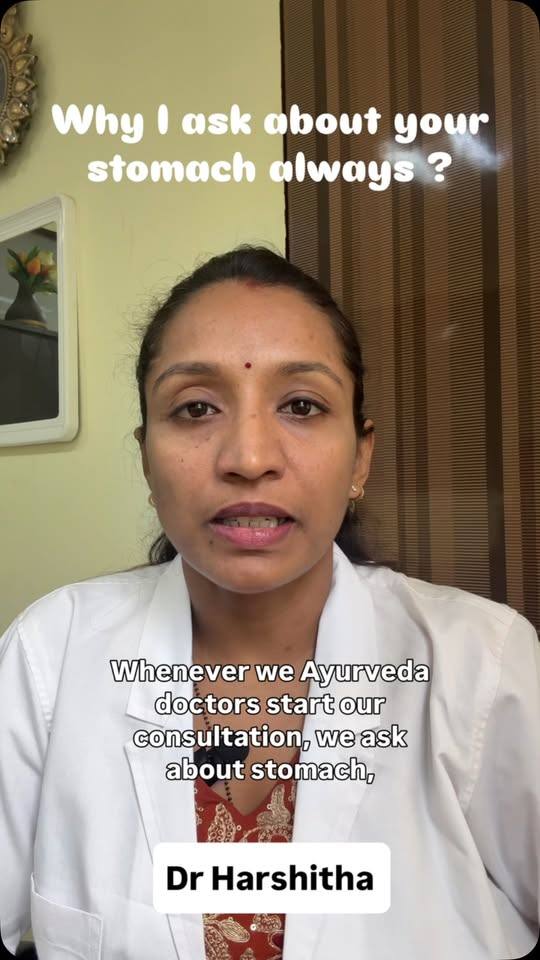 Gut health0:44
Agni: the digestive fire
Ayurveda places digestion, called Agni, at the centre of health. When Agni works well, food is digested fully and nourishes every tissue. When it is weak or irregular, food is only partly digested, and the leftover, sticky residue is called ama. Ama is described as clogging the body's channels, and it is linked in classical texts to many conditions, from joint pain and skin problems to fatigue.
What the doctor is looking for
Questions about your stomach are a quick way to judge your Agni. Expect to be asked about:
- Your appetite, and whether you feel hungry at mealtimes
- Bloating, gas, belching or acidity after food
- How often you pass stool, and whether it is regular, hard or loose
- A heavy feeling or drowsiness after meals
- A coated tongue in the morning
The answers help the doctor understand your condition and choose medicines and a diet that your body can actually digest and use.
Simple habits that support digestion
- Eat at regular times, and make lunch your main meal
- Prefer warm, freshly cooked food over cold, stale or very heavy food
- Eat when you are hungry, and stop before you feel stuffed
- Avoid snacking when the previous meal has not been digested
- Sip warm water rather than iced drinks
- Leave two to three hours between dinner and sleep
- Agni (digestion) is central to health in Ayurveda
- Weak digestion leaves ama, linked to many conditions
- Your answers about appetite and bowels guide the treatment
- Regular, warm, well-timed meals support digestion
Long-standing acidity, bloating or constipation? Book a consultation, or see the digestive conditions we treat.
General information only, not a diagnosis or a substitute for a consultation. See our medical disclaimer. More health tips.